

Many professionals consider NFC inherently vulnerable because its wireless nature seems to expose it to risks. The reality is different. NFC does not rely on a single layer of protection, but on multiple security layers that work together to protect even sensitive corporate data. In this article, you will see how NFC security works, what threats actually exist, what protection techniques are available, and how to implement best practices in your professional networking.
Table of Contents
- What makes NFC secure: The basic layers of protection
- Threats and risks in NFC implementation: What businesses need to look out for
- Specialized security methods for NFC: Encryption, authentication, and access controls
- Best practices for secure professional networking with NFC
- How to implement secure NFC solutions for professional networking
- Frequently Asked Questions
Key Takeaways
| Point | Details |
|---|---|
| Multiple security layers | NFC relies on encryption, authentication, and hardware security to protect data. |
| Common threats | Relay attacks, cloning, malware, and misconfigurations are the main risks for professional applications. |
| Best practices | Enable NFC only when needed, conduct audits, and choose genuine hardware. |
| Card selection | Select NTAG DNA or DESFire with PKI for maximum security in business networking. |
What makes NFC secure: The basic layers of protection
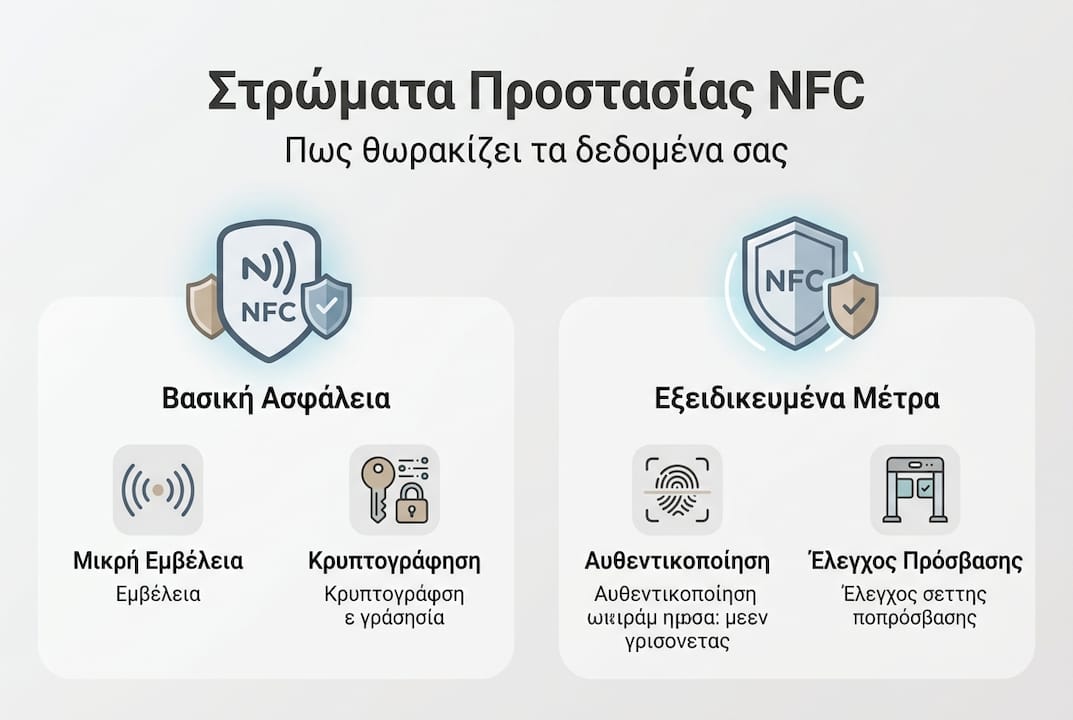
Following the introduction to the security framework, let's look at the foundations of protection that NFC offers. This technology is not just a wireless communication channel; it is a system with built-in security mechanisms from its very design.
The first and most obvious feature is the short communication range. NFC operates at a range of under 10cm, which makes interception from a distance extremely difficult. This is no accident; it is a design choice that acts as the first barrier of security.
The second layer is encryption. AES-128/256 and ECC encryption are now standard for high-security applications. These technologies ensure that transmitted data cannot be decrypted even if intercepted.
The third layer is mutual authentication. Before any data exchange, the device and the tag verify each other's identity. Unauthorized devices are automatically rejected. Finally, the secure element stores encryption keys in isolated hardware, away from the main operating system.
Key NFC security features:
- Communication range under 10 centimeters
- AES-128/256 and ECC encryption
- Mutual device authentication
- Data tokenization
- Secure element for key storage
- Support for secure NTAG DNA exchange
| Feature | Detail |
|---|---|
| Range | Under 10cm |
| Encryption | AES-128/256, ECC |
| Authentication | Mutual authentication |
| Key storage | Secure element |
| Standard | ISO 14443 |
NFC protects data with multiple layers of security that work simultaneously, making interception extremely difficult even for specialized attackers.
For those involved in NFC networking, understanding these layers is essential to choosing the right solution. An NFC connection profile based on reliable hardware offers substantial protection.
Threats and risks in NFC implementation: What businesses need to look out for
Knowing the technical specifications, let's look at what actually threatens the security of NFC applications. Threats exist, but they are specific and manageable.
The main threats to NFC include eavesdropping, relay attacks, replay attacks, cloning of tags, and malware. Each of these has a different risk profile for professional applications.

| Threat | Description | Risk Level |
|---|---|---|
| Eavesdropping | Interception of data during transmission | Low (due to range) |
| Relay attack | Signal retransmission from a distance | Medium |
| Replay attack | Repetition of a previous transaction | Medium |
| Cloning | Copying a tag | High in legacy hardware |
| Malware | Malicious software via NFC | Low with updated software |
An important finding: relay attacks can dramatically reduce keyspace and lead to key recovery in less than a minute on vulnerable systems. This is not theoretical; it is documented in research conditions.
The most common edge cases concerning NFC business cards:
- Use of old MIFARE Ultralight C tags without CMAC enforcement, where 100% of systems were found vulnerable
- Tags without write protection, allowing data modification
- Applications without mutual authentication
- Storing sensitive data directly on the tag instead of a link
- Use of uncertified hardware from unknown vendors
Also, malicious NFC tags can execute automatic actions on unprotected devices. NFC attack detection is an active field of research with practical applications.
Professional Tip: To identify non-genuine tags, use NFC scanner apps that check the UID and chip characteristics. Genuine tags from reputable manufacturers have unique, non-modifiable identifiers. Avoid tags from unknown sources, especially in corporate environments.
Comparing NFC vs. paper cards shows that NFC, with proper implementation, offers a significantly higher level of control. The benefits of NFC networking outweigh the risks when proper practices are applied.
Specialized security methods for NFC: Encryption, authentication, and access controls
After analyzing threats, let's delve into modern protection techniques. Professionals choosing NFC solutions must know which technologies offer real security.
ST25 series and NTAG DNA support AES-128/256, ECC, ISO 14443, and EAL6+ certification, which is the highest level of security evaluation for commercial products. For business implementation, NTAG DNA and DESFire with PKI integration are considered the best choice.
Key protection methods that should be implemented:
- Password timeout and locking: Automatic deactivation after failed access attempts
- AES/CMAC encryption: Ensures the integrity of every message
- Pseudonymization: Replacing identifiers with pseudonyms to protect identity
- Read-only mode: Locking the tag so third parties cannot write to it
- Regular audits: Verifying hardware and software integrity
- PKI integration: Public Key Infrastructure for strong authentication in corporate networks
| Tag Type | AES | ECC | PKI | Read-only | EAL |
|---|---|---|---|---|---|
| NTAG DNA | Yes | Yes | Yes | Yes | EAL6+ |
| DESFire EV3 | Yes | Yes | Yes | Yes | EAL5+ |
| MIFARE Ultralight C | Partially | No | No | Yes | None |
| ST25 Series | Yes | Yes | Yes | Yes | EAL6+ |
NFC Forum certification ensures that devices meet minimum interoperability and security standards. Always look for certified products.
Professional Tip: When choosing an NFC card for professional use, check if it supports AES-128 or higher, mutual authentication, and read-only mode. If the manufacturer does not explicitly state these features, avoid the product. Learn how to get an NFC card with the appropriate security features.
If you want to better understand what an NFC business card is and how it works in practice, there are options available for every level of need, from simple white NFC tags to fully encrypted business cards.
Best practices for secure professional networking with NFC
Having explained the protection techniques, we provide practical guidelines for secure networking. The following practices are intended for professionals and businesses that use NFC cards and tags on a daily basis.
Best NFC security practices include enabling NFC only when needed, using read-only tags, strong encryption, key diversification, and regular audits. These are not theoretical recommendations; they are documented practices from hardware manufacturers.
Practical steps for secure NFC use in a professional environment:
- Use exclusively genuine tags from certified manufacturers
- Enable NFC on your device only when in use
- Avoid storing sensitive data directly on the tag
- Use tags in read-only mode when writing is not required
- Disable auto-actions on your device for NFC
- Regularly check hardware for signs of tampering or replacement
- Implement key diversification in corporate deployments
- Keep the firmware of devices reading NFC tags updated
Malicious NFC tags are a real risk in public spaces. Do not scan tags you find in unidentified locations.
Professional Tip: For maximum security, implement a card lifecycle: log every issued card, set an expiration date, and have a revocation procedure in case of loss. In a corporate environment, central management of tags significantly reduces the risk.
The 7 reasons for an NFC business card include security as a key advantage over traditional methods. The NFC networking guide provides additional practical advice for 2026.
How to implement secure NFC solutions for professional networking
With practices and techniques covered, we present ready-to-use secure solutions. Choosing the right NFC card is not just about design; it is about the security features the hardware possesses.
TagTouch offers professional NFC cards that link to a customizable digital profile, allowing for secure exchange of professional details with a single tap. Each card supports instant information updates without replacing the hardware.
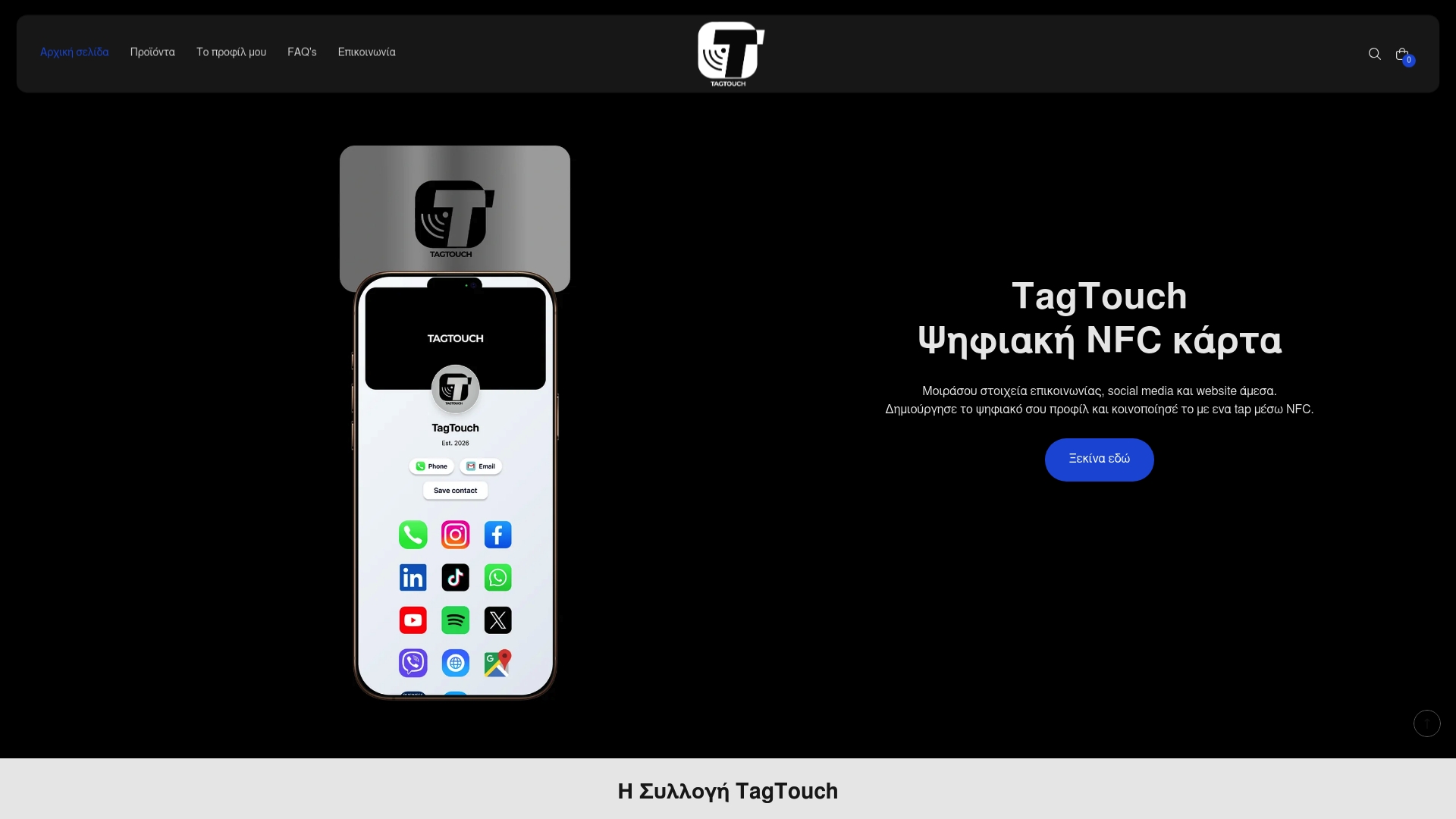
Available options for every professional need: white NFC PVC card for daily use, blue NFC PVC card for a discreet corporate presence, and black NFC metal card for a premium professional result. All TagTouch products link to a central profile that is easily updated, keeping your data accurate and current.
Frequently Asked Questions
How secure are NFC tags in professional use?
NFC tags are secure provided that encryption, mutual authentication, and reliable hardware are used. Security depends on correct implementation, not just the technology itself.
What are the most common threats to NFC?
Key threats include eavesdropping, relay attacks, replay attacks, tag cloning, and malware. Most are mitigated with modern hardware and proper settings.
How can I enhance data security in NFC applications?
Enable NFC only when required, use cards with AES/ECC encryption, and insist on regular hardware checks and audits.
Are there vulnerable NFC technologies that should be avoided?
Yes, MIFARE Ultralight C systems without CMAC enforcement are prone to attacks and key recovery. Prefer NTAG DNA or DESFire for professional use.
What is the appropriate NFC card for business security?
NTAG DNA and DESFire type cards with PKI and AES/ECC are considered appropriate for professional security. Always check if the hardware carries EAL5+ certification or higher.