

TL;DR:
- NFC has evolved into a tool for professional networking and simple data exchange.
- Its speed, reliability, and security make it ideal for conferences and business connections.
- A proper strategy and an updated digital profile are critical for successful networking.
Most professionals associate NFC exclusively with contactless payments at the supermarket. This perception is incomplete. NFC has evolved into a central tool for professional networking, allowing for the instant exchange of contact details, digital profiles, and business information with a simple tap. The NFC market is expected to reach $40 billion in 2026, with a significant part of this growth driven by networking applications. This guide presents the key concepts, benefits, and modern trends that every professional should know.
Table of contents
- What is NFC and how it works
- Key benefits and practical applications of NFC in networking
- Comparing NFC with Bluetooth and other networking technologies
- Security cases and challenges in NFC usage
- The truth about NFC networking that few highlight
- Upgrade your networking with physical TagTouch NFC cards
- Frequently asked questions
Key Takeaways
| Point | Details |
|---|---|
| NFC in networking | NFC is ideal for quick, secure information exchange at professional meetings. |
| Benefits over Bluetooth | NFC requires minimal preparation, no pairing, and works with a single move. |
| Managing risks | Basic security through limited range and simple encryption. |
| Practical application | NFC business cards dramatically enhance networking. |
What is NFC and how it works
NFC (Near Field Communication) is a short-range wireless communication technology. It operates at 13.56 MHz for data exchange at distances of up to 4-5 centimeters. This very short range is not a weakness, but a security feature: for data exchange to occur, the two devices must be nearly in contact.
Technically, NFC is based on the principle of electromagnetic induction. One device emits a field and the other detects it, thus creating a communication channel. The process is completed in fractions of a second, without requiring any setup from the user.
There are three basic NFC modes: reader/writer, peer-to-peer, and card emulation. In reader/writer mode, a device reads or writes data to a passive tag, such as an NFC business card. In peer-to-peer mode, two active devices exchange data with each other. In card emulation mode, a device simulates a physical card, which is useful for payments or identification.
For professional networking, the most useful mode is reader/writer. An NFC tag embedded in a business card stores data, such as a digital profile URL, phone number, or LinkedIn link. When a smartphone is brought near the card, it automatically reads the data and opens the corresponding content. No app, internet connection at the time of reading, or any other user action is required.
The NFC networking benefits for professionals are clear: speed, simplicity, and reliability. At a business event, information exchange happens in less than a second, without typing, errors, or having to look for paper.
The technology is supported by almost all modern smartphones, both Android and iOS (from iPhone 7 onwards). NFC technical specifications have been standardized by the NFC Forum, ensuring interoperability between different manufacturers.
Key NFC characteristics:
| Characteristic | Value |
|---|---|
| Operating frequency | 13.56 MHz |
| Maximum range | 4-5 cm |
| Connection speed | Under 0.1 second |
| Power consumption | Very low |
| Modes | Reader/writer, peer-to-peer, card emulation |
- No pairing or manual configuration required
- Works with passive tags without a battery
- Full compatibility with ISO 14443 and ISO 18092
- Supported by Android and iOS
Professional tip: Before your first networking session with physical NFC cards, check that NFC is enabled on your device. On Android, you can find this in Settings > Connectivity. On iPhones, it is automatically enabled when the device is brought near a tag.
Key benefits and practical applications of NFC in networking
Now that we understand what NFC is, it's worth seeing how it is utilized practically in professional networking. The benefits are not theoretical, but measurable in daily use.
The most immediate benefit is speed. Information exchange with NFC happens in a fraction of a second. Comparatively, typing a phone number or scanning a QR code takes 15-30 seconds and is prone to errors. At a conference with hundreds of contacts, this difference is significant.
The second major advantage is accuracy. There is no risk of incorrectly entering an email or phone number. The data is transferred automatically, exactly as it is saved in the digital profile. This eliminates one of the most common problems of traditional business card exchange.
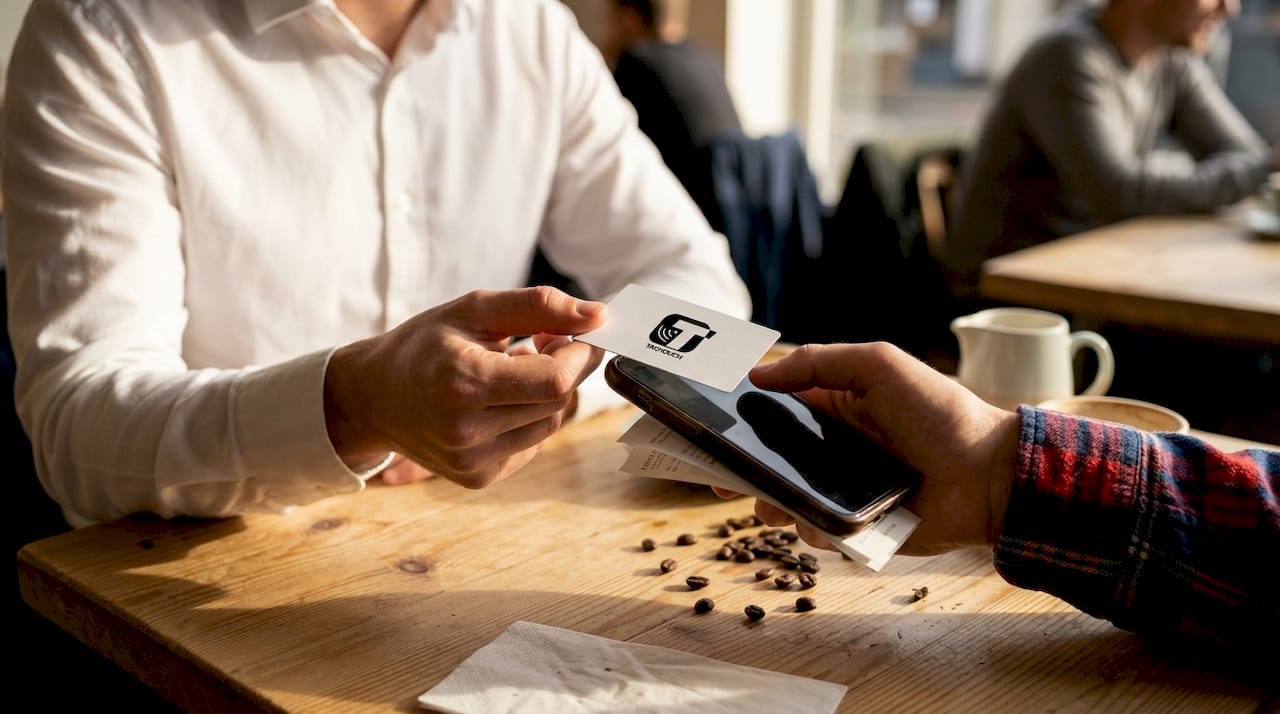
The NFC market is expected to reach $40 billion by 2026, with significant growth in networking applications due to IoT, digital keys, and contactless experiences. This growth reflects the increasing adoption of NFC by professionals and businesses worldwide.
In practice, NFC applications in networking include:
- Exchange of business details with a tap at conferences and events
- Link to digital profiles containing portfolios, social media, and websites
- Activation of offers at exhibitions and product presentations
- Automatic saving of contact to the recipient's phone without manual entry
- Connection to social networks like LinkedIn directly from the card
Another important element is the absence of a need for a connection at the moment of exchange. The NFC tag works independently of an internet connection. The device reading the tag only needs a connection if it wants to open a URL, but the reading of basic data happens offline.
Modern NFC tips for professionals also emphasize the importance of updating your digital profile. Unlike traditional cards, an NFC tag can lead to a profile that is constantly updated. Changed jobs? Update the profile and all your contacts automatically see the new details.
“NFC networking does not replace conversation; it speeds up the transfer of details so that the conversation has more time.”
NFC technological developments show that new capabilities are expected by 2026, such as improved security and faster data transfer speeds, which will further enhance its use in networking.
Professional tip: Always add personalized information to your NFC tag, such as specialty, current project, or a portfolio link. This sets you apart at professional events where most people hand out simple cards with basic information.
Comparing NFC with Bluetooth and other networking technologies
As NFC dominates rapid networking, it is useful to understand how it differs from other widespread technologies. The choice of the right technology depends on the specific need.
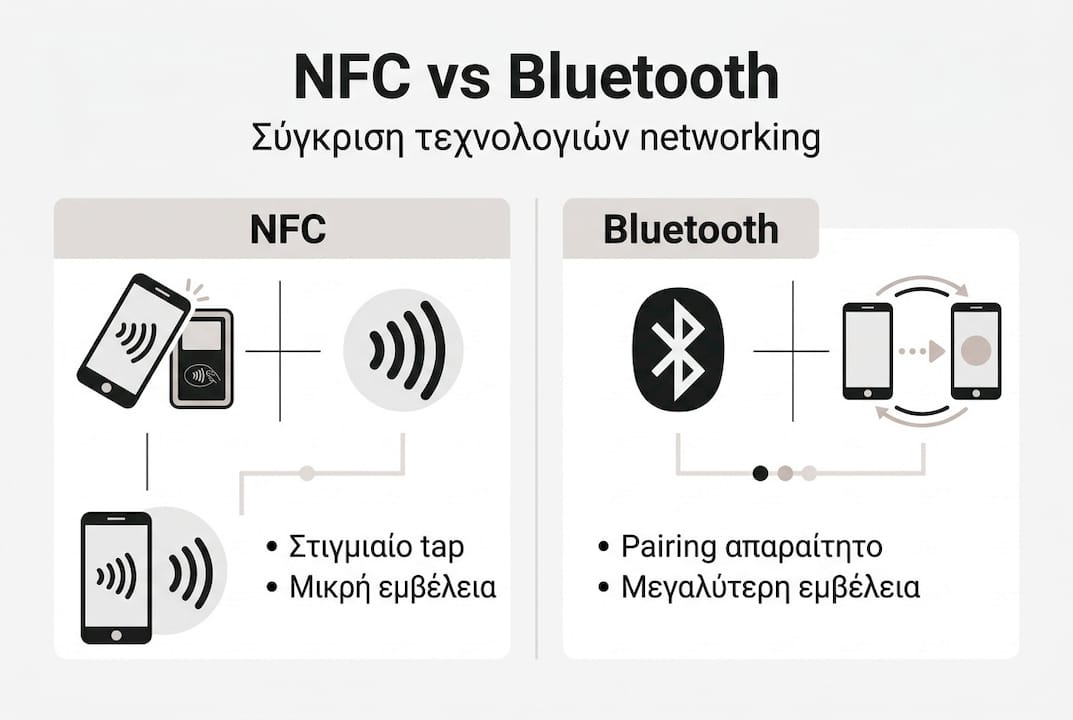
NFC has faster setup without pairing, a much shorter range, and minimized power consumption compared to Bluetooth. This makes it ideal for quick exchanges in professional environments, where there is no time for settings.
Wireless networking standards cover a wide range of technologies, each with different range, speed, and consumption characteristics.
Technology comparison table:
| Characteristic | NFC | Bluetooth | QR Code | Wi-Fi Direct |
|---|---|---|---|---|
| Range | 4-5 cm | 10-100 m | Line of sight | 200+ m |
| Setup | No pairing | Requires pairing | No setup | Requires setup |
| Consumption | Minimal | Moderate | None | High |
| Security | High | Moderate | Low | Moderate |
| Exchange speed | Instant | 2-5 sec. | 5-10 sec. | Slow setup |
Bluetooth is suitable for continuous connection between devices, file transfers, or peripheral use. In networking, however, the need for pairing creates friction. You must find the device, confirm the connection, and then exchange data. At a busy event, this process is ineffective.
QR codes are free and easy to create, but require line of sight and proper lighting. Also, they cannot be updated after printing. An NFC tag can be reprogrammed as many times as needed.
Scenarios where NFC is the best choice:
- Exchanging professional details at a conference
- Presenting a product at an exhibition with a tap on a display
- Identification and access to corporate facilities
- Connecting guests with digital content in a space
An NFC business card is currently the most practical tool for fast and reliable networking, combining the physical presence of a card with the capabilities of a digital profile.
Security cases and challenges in NFC usage
Having examined functionality and comparisons, we now focus on security. Every professional using NFC must be aware of the basic risks and how to manage them.
The limited range of NFC offers physical protection, but does not eliminate all risks. There is a possibility of eavesdropping and relay attacks, especially without sufficient encryption. Eavesdropping concerns the interception of communication by a third party, while relay attacks concern re-transmitting the signal over a longer distance.
Statistic: According to security research, the majority of NFC attacks require physical proximity of less than 10 centimeters, making attacks difficult but not impossible in crowded places.
Basic security measures for professionals:
- Use encryption: Ensure that data transferred via NFC is encrypted, especially if it contains sensitive information.
- Disable NFC when not in use: Reduces the risk of unauthorized reading in public spaces.
- Use trusted apps: Avoid third-party apps that have not been verified for managing NFC tags.
- Regular tag checks: Ensure that the data on your tags is accurate and has not been modified.
- Use read-only tags: For business cards, set the tags as read-only so they cannot be reprogrammed by third parties.
The NFC Forum has published a roadmap for 2026 that includes security improvements for the quantum era. These developments mainly concern encryption algorithms resistant to quantum computers, ensuring that NFC will remain secure in the future.
The basic NFC security measures implemented today are sufficient for the majority of professional uses. The greatest threat is not technical but human: negligence in checking devices and the use of insecure apps.
Also, non-compatibility between devices is a practical challenge. Some older smartphones do not support NFC or only support specific functions. Before every networking event, it is useful to know that your card works with the most common devices on the market.
The truth about NFC networking that few highlight
There is a common misconception: that getting an NFC card is enough to improve networking. This is not true. The tool is only the beginning.
Professionals who make the best use of NFC are not those with the most impressive card, but those who have thought about what they want to convey. A digital profile that hasn't been updated in six months, or that contains only basic details, offers no advantage over a simple paper card.
Networking with NFC in 2026 requires strategic thinking: what content will the other person see, how quickly will they find what they need, and does the profile reflect your current professional image? NFC is a tool for empowering real relationships, not a substitute for them.
Upgrade your networking with physical TagTouch NFC cards
Having examined the theory and practice of NFC networking, the next move is choosing the right product. TagTouch offers professional NFC cards for every need and style.
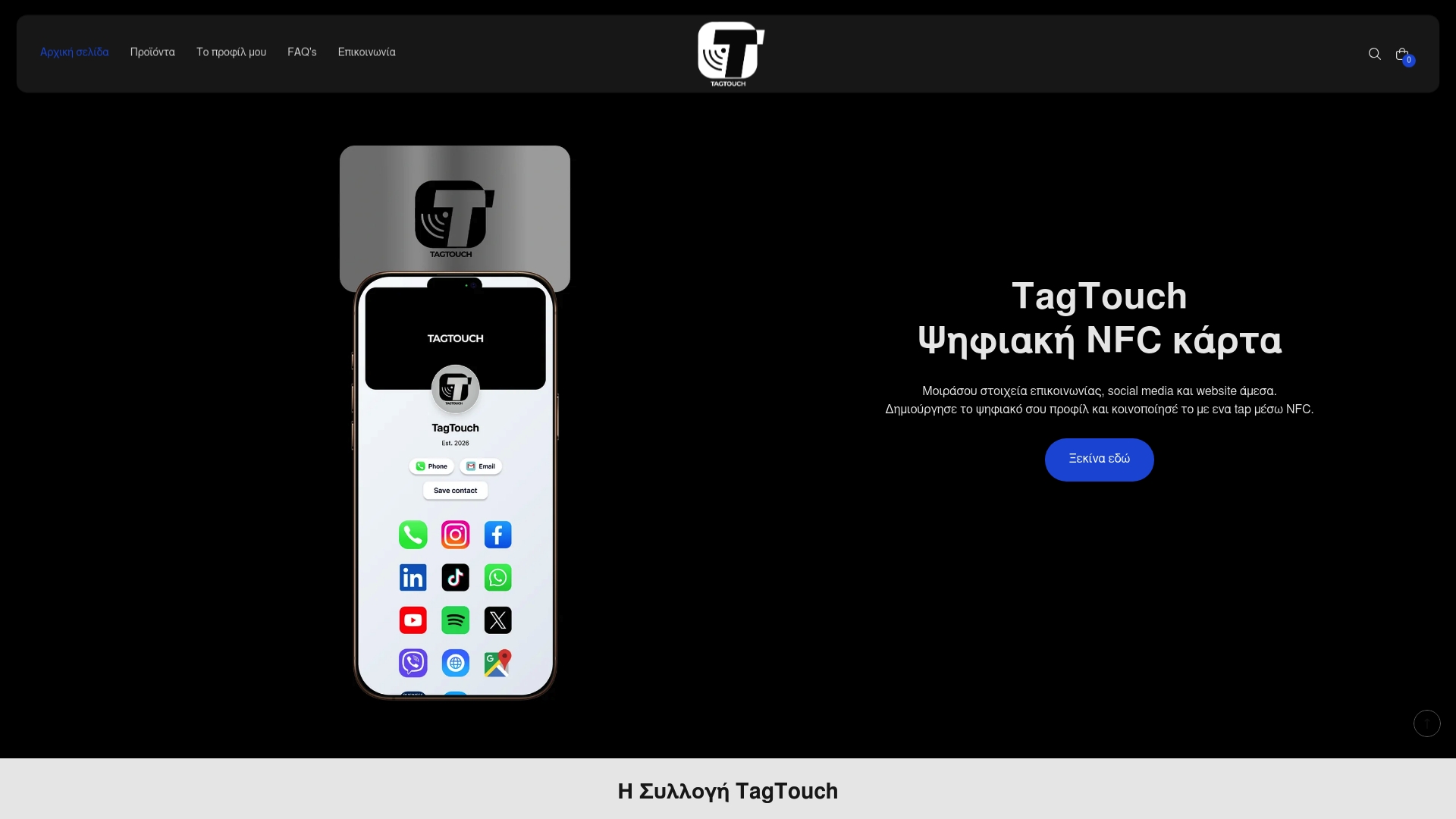
The Mirror NFC Card is suitable for professionals who want a premium look. The White NFC PVC Card offers a reliable solution at an affordable price. Every TagTouch card connects to a digital profile that is easily updated and contains all your professional information in one place. No technical knowledge is required for setup. One tap and your networking is instantly upgraded.
Frequently asked questions
What do I need to start networking with NFC?
All you need is an NFC-enabled smartphone and an NFC tag business card. Most modern mobile phones support NFC, and it only requires activation from the settings.
What is the difference between NFC and Bluetooth in networking?
NFC offers instant networking with one tap and low power consumption, while Bluetooth requires pairing and has a greater range but a slower connection process.
Is NFC networking safe?
NFC is considered secure due to its limited range, but risks such as eavesdropping are minimized by using encryption and disabling it when not in use.
Can I use the same NFC tag on multiple devices?
Yes, the same physical NFC tag works with any compatible device. Interoperability may vary depending on the operating system and device version.