

TL;DR:
- NFC business cards offer instant, secure access to digital profiles via a simple tap.
- They use high-capacity NTAG chips compatible with both iOS and Android.
- They enhance networking, create a strong impression, and reduce the environmental footprint compared to paper cards.
Exchanging business details with paper cards is a practice that many professionals are beginning to leave behind. NFC (Near Field Communication) enables data transmission with a simple tap of two devices, with no app required and no typing. In a business environment where the first impression counts, using an NFC card or tag means immediate access to your digital profile, social media, and contact details. This article presents technical specifications, practical application examples, a comparison of solutions, and technical tips for those looking to upgrade their networking.
Table of contents
- Key features of smart NFC networking
- Innovative applications of smart NFC networking in business environments
- Comparative analysis: NFC cards, traditional cards, and digital profiles
- Technical tips for secure and efficient NFC implementation
- Why smart NFC networking is truly transforming networking
- Upgrade your networking with premium NFC solutions from TagTouch
- Frequently Asked Questions
Key Takeaways
| Point | Details |
|---|---|
| Exchange immediacy | With an NFC card, you share your business details instantly, without needing an app. |
| Hybrid options | Combining a physical card with a digital profile creates a unique experience. |
| Technical security | NTAG chips and dynamic links reduce security risks. |
| Adaptability to every need | Whether for events or permanent use, NFC networking offers flexibility. |
Key features of smart NFC networking
To understand how smart NFC networking works in practice, let’s look at its technological characteristics and how it becomes part of a professional routine.
NFC operates at a frequency of 13.56 MHz and has an operating range of approximately 4 centimeters. This means data transfer requires physical proximity, which adds a layer of control and security. No internet connection is needed at the moment of the tap, and the tags are battery-free, drawing power from the reader's field.
The NFC chip securely stores a vCard or a link to a digital profile, accessible with a simple tap. The most common chips for business cards are the NTAG213 and NTAG215, with capacities of 144 and 888 bytes, respectively. This is sufficient for storing a URL leading to a full digital profile or even a vCard 3.0 with complete contact details.
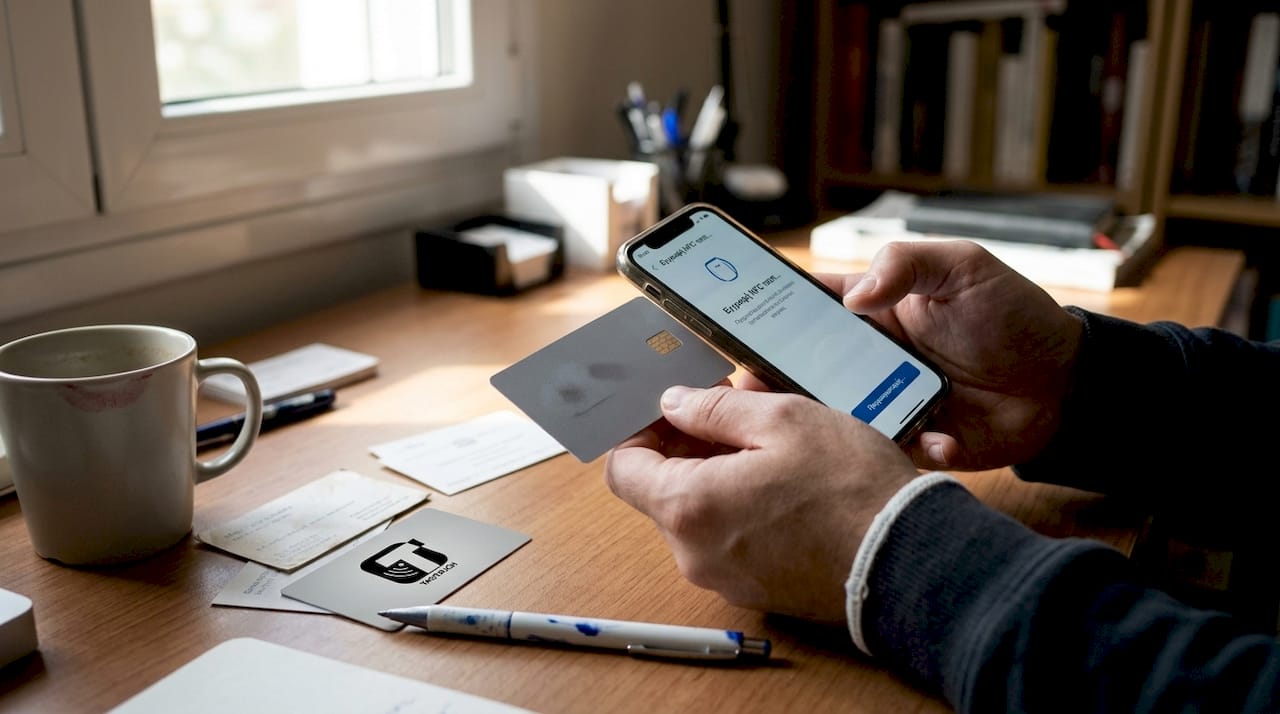
To understand what an NFC card is and how it fits into your daily professional routine, consider that every modern smartphone with iOS or Android supports NFC without additional settings. For devices that do not support NFC, there is always the fallback option via a QR code, which can be printed on the same card.
| Chip | Capacity | Compatibility | Usage |
|---|---|---|---|
| NTAG213 | 144 bytes | iOS, Android | URL, short vCard |
| NTAG215 | 504 bytes | iOS, Android | vCard 3.0, URL |
| NTAG216 | 888 bytes | iOS, Android | Full data |
| MIFARE Classic | 1KB/4KB | Limited | Not recommended for NFC cards |
The security weaknesses of MIFARE Classic NFC make NTAG chips a more suitable choice for business cards. The security of MIFARE Classic has documented vulnerabilities that are not present in NTAG chips.
Key features of NFC tags for professional use:
- Battery-free operation: No need for charging or battery replacement.
- Instant reading: Simply tap the phone to the card, no app required.
- Rewritable: Most tags can be reprogrammed as long as they haven't been locked.
- Small size: They fit in a wallet, as a sticker, or on a metal card.
- QR fallback: For devices without NFC, a QR code ensures access.
Professional tip: If you use a dynamic URL (e.g., via a profile management platform), you can change your details without changing the card. This saves time and the cost of reprinting.
Innovative applications of smart NFC networking in business environments
Now that we have understood the basic technical elements, let's look at the dynamic application of these in a professional's daily life.
The general use of NFC in payments and transport is already widespread in Greece, however, NFC business cards are currently evolving internationally. This means that those adopting them now have a clear competitive advantage.
The most common application is the NFC business card. At a meeting or event, the professional taps their card onto the other person's phone, and they immediately see the full digital profile: name, title, company, phone, email, LinkedIn, website, and even a presentation video. No typing is needed. No need to photograph a card.
At events and conferences, NFC tags are used for participant check-in, interaction with exhibitors, and instant access to presentation materials. An NFC sticker on a display or product can lead the visitor to a brochure, price list, or contact form without needing to share paper.
For networking with NFC in 2026, professionals now have multiple choices: from high-aesthetic metal cards to simple PVC cards and phone tags that stick to the back of a phone.
The best networking practices with NFC include using dynamic profiles that are updated in real-time so the recipient always sees current details.
Practical scenarios for NFC application in business environments:
- Client meetings: Instant transfer of contact details and digital profile.
- Exhibitions and conferences: Check-in, interaction with exhibitors, access to presentations.
- Retail and physical stores: NFC stickers on products for quick information.
- Freelancers and consultants: Presenting a portfolio with one tap.
- Sales teams: Uniform presentation of a corporate profile by all members.
- Trainers and speakers: Instant sharing of seminar material with the audience.
Professional tip: Use an NFC phone tag on the back of your mobile as a supplement to your card. This way, you can share your profile even if you don't have your card with you.
Comparative analysis: NFC cards, traditional cards, and digital profiles
Having seen practical scenarios, it is worth comparing the available options openly so you can arrive at the most beneficial solution.
The combination of a physical NFC object and a digital profile creates the greatest impact and functionality, compared to exclusively digital or conventional means. This is not just a matter of impression. It is a matter of effectiveness.
| Criteria | Paper card | NFC card | Exclusively digital |
|---|---|---|---|
| Cost per use | Low initial, recurring | Higher initial, zero subsequent | Zero |
| Data update | Reprinting | Instant online | Instant online |
| Impression | Low | High | Moderate |
| Environmental footprint | High | Low | Zero |
| Compatibility | Universal | iOS/Android + QR fallback | Depends on platform |
| Data security | None | Moderate to high | Depends |
| Presentation ability | Limited | Full (media, links) | Full |
The main advantages of NFC cards over paper ones:
- Zero reprinting cost every time your details change.
- Instant access to rich digital content that doesn't fit on paper.
- Reduced environmental footprint with no paper or ink.
- Analytics capability to see how many people visited your profile.
- Professional image that reflects a modern approach.
“The NFC card is not just a replacement for a paper one. It is a gateway to a living, updated professional profile.”
For a detailed comparison of NFC versus paper cards and the benefits of NFC in networking, it is worth examining both sides before you decide.
One point often overlooked: a paper card is often lost or thrown away. An NFC card leads to a digital profile that is automatically saved to the recipient's mobile. This significantly increases the chances that your professional contact will remember you.
Technical tips for secure and efficient NFC implementation
To maximize the benefits of NFC solutions, we focus on correct technical implementation and the important details that make a difference.
Choosing the right chip is the first step. For maximum compatibility, prefer NTAG chips and credit card size. Dynamic URLs protect against static cloning and allow for flexible management. This means that if you change companies or phone numbers, you don't need a new card.
Consumer NFC business cards do not carry increased security risks because the data is public. Transitioning to encryption is only required if sensitive data is transmitted. For standard business cards with a URL or vCard, no additional encryption is needed.
The technical features of a mirror NFC card show how a premium metal card combines aesthetics and functionality into a professional-grade product.
Practical technical tips for NFC implementation:
- Choose NTAG213 or NTAG215 for maximum compatibility with iOS and Android.
- Avoid MIFARE Classic for business cards due to known vulnerabilities.
- Use a dynamic URL through a management platform for easy updating.
- Prefer credit card size (85.6 x 54 mm) for easy carrying in a wallet.
- Test reading on iOS and Android before distributing your cards.
- Lock the chip if you don't want it to be reprogrammed by third parties.
- Add a QR code on the card as an alternative for devices without NFC.
Professional tip: Always test your card with different phone models before distributing it at important professional events. A reading failure in front of a client leaves a bad impression.
An additional point: if you use a metal card, ensure the chip is positioned correctly so that the metal does not interfere with the reading. Well-designed metal NFC cards solve this problem with specific antenna placement.
Why smart NFC networking is truly transforming networking
Having covered practical examples, comparisons, and technical instructions, let's look at why strategic adoption of NFC solutions makes a real difference in the modern market.
The strongest point of NFC networking is not the technology. It is the moment of contact. When a professional taps their card onto the mobile of a new contact, an instant, digital connection is created that isn't easily forgotten. This wow factor is difficult to replicate with any other medium.
The NFC card doesn't just replace a paper card. It upgrades the entire presentation of your professional profile. The recipient doesn't receive a piece of paper. They receive access to a living, updated digital profile with all the information they need.
The professionals who use NFC cards build their brand with innovation and a modern disposition. In a world where everyone hands out paper cards, the one who uses NFC stands out immediately.
Upgrade your networking with premium NFC solutions from TagTouch
If you want to practically implement what has been analyzed, see tangible suggestions to take the next step in your networking.
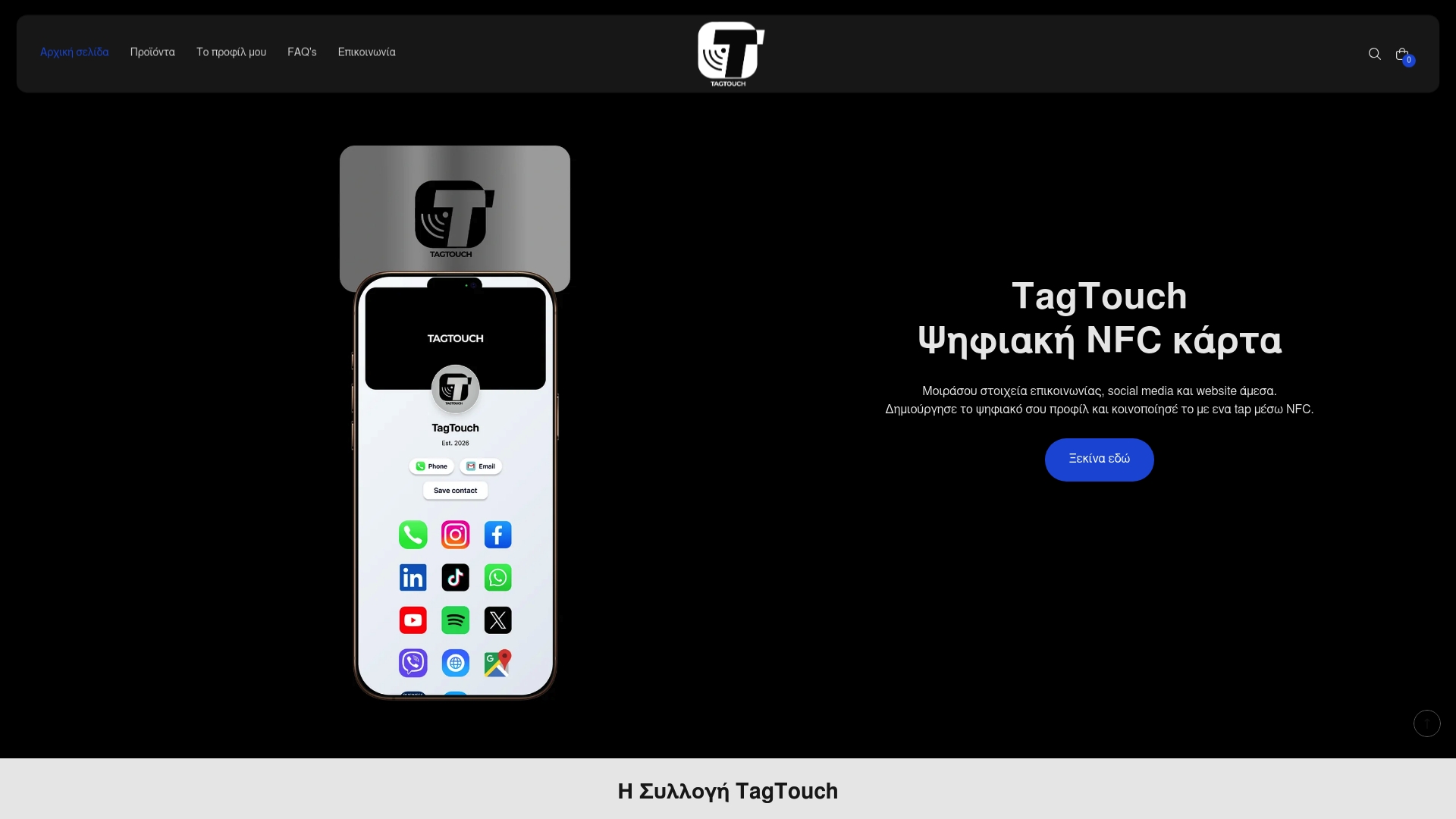
TagTouch offers NFC cards in various versions for every professional need. The Mirror NFC Card is a high-aesthetic metal card with an NTAG chip, suitable for professionals who want to leave a strong impression. The White NFC PVC Card is a more accessible option, ideal for teams or for a first introduction to NFC technology. Every TagTouch card connects to a customizable digital profile that is updated instantly. One tap, full presentation.
Frequently Asked Questions
What data can I store on an NFC business card?
You can store vCard details, a link to a digital profile, social media, videos, or other business data. The storage capacity ranges from 144 to 888 bytes depending on the chip, which is sufficient for a vCard 3.0 or a URL.
How secure are NFC business cards?
Standard NFC business cards are considered secure, as they transmit non-sensitive, public data. The need for encryption only arises if sensitive information is being transmitted.
Do NFC cards work on all mobile phones?
Most modern iOS and Android devices support NFC. For non-NFC phones, a QR code fallback ensures access to the digital profile.
Which chip should I choose for an NFC business card?
NTAG chips offer high compatibility with both iOS and Android and are considered ideal for NFC business cards.